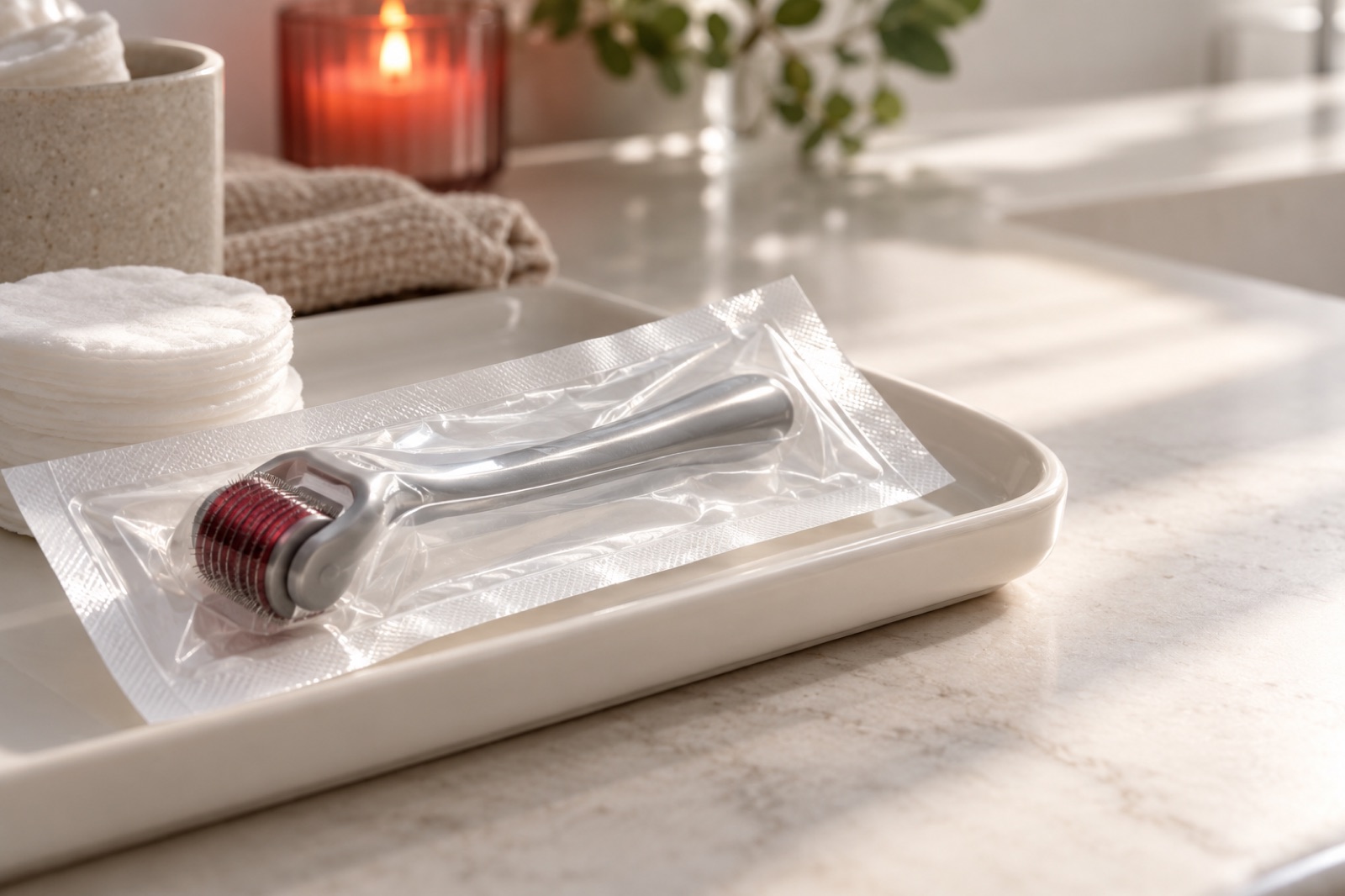
Microneedling for hair loss uses a roller, stamp or pen with fine needles to make tiny punctures in the scalp. Some early studies found better results when it was combined with minoxidil, but a larger 2026 study in women found no added benefit over minoxidil alone. The evidence is still developing, and the procedure has risks, especially when equipment or technique is unsafe.
It is important to start with the type of hair loss being considered. Low-level light and microneedling have been studied for androgenetic alopecia, also called pattern hair loss. They are not established solutions for every cause of thinning. Sudden, patchy or painful hair loss should be assessed by a doctor, as should scalp symptoms that are new or worsening.
Key takeaways
- Microneedling studies mostly looked at the procedure alongside minoxidil, so they do not show whether microneedling alone helps.
- Early trials were promising, particularly in men, but a larger trial in women found no significant added benefit.
- Needling can cause pain, irritation, bleeding or infection. Clinic procedures and at-home rollers carry different practical risks.
- Do not choose a needle depth or schedule based on online instructions. Follow a qualified clinician’s advice.
- Low-level light is a non-invasive approach studied for pattern hair loss, but it is a separate option and does not replace medical advice.
How might scalp microneedling work?
Microneedling creates controlled, tiny injuries in the skin. Researchers have proposed that the healing response may send signals around hair follicles that support growth. Another hypothesis is that punctures may help topical treatments such as minoxidil enter the skin. These explanations are proposed mechanisms, not proven explanations of how or why results occur.
Studies often combine microneedling with minoxidil. That makes it difficult to tell whether any improvement comes from the needling, the medicine, or both. The studies also vary in their participants, procedures and follow-up, so one result cannot reliably predict what will happen for an individual.
Minoxidil is a topical medicine used for pattern hair loss. Whether it is suitable depends on the person and their circumstances. Discuss its use with a doctor or pharmacist, and follow the product information and professional advice. Prescription medicines, including finasteride, are decisions for a doctor; do not seek or use them without a prescription.
What does the research say?
The evidence includes a small pilot study in men, a four-person case series, a network meta-analysis and a larger randomized trial in women. The findings do not point to a single answer for everyone. A recent trial found that adding microneedling did not significantly improve results over minoxidil alone in women, despite earlier positive findings in some studies.
| Study | What it examined | What it found |
|---|---|---|
| Dhurat et al., 2013 | Randomized, evaluator-blinded pilot study of 100 men with mild-to-moderate pattern hair loss. The trial used weekly microneedling plus twice-daily 5% minoxidil, compared with 5% minoxidil alone, for 12 weeks. | Hair counts and investigator and patient ratings improved more in the microneedling group. This was a short pilot study in men, and the minoxidil schedule described here is the trial dose, not general advice. Read the study. |
| Dhurat and Mathapati, 2015 | Case series of four men who had not regrown hair on finasteride and minoxidil; researchers added microneedling and followed them for up to 18 months. | New growth was reported and held during follow-up. With only four people and no comparison group, this cannot establish that microneedling caused the change. Read the study. |
| Liu et al., 2026 | Twenty-four-week randomized, open-label trial in 245 women with mild-to-moderate pattern hair loss. It compared 2% minoxidil alone with minoxidil plus monthly or every-two-weeks microneedling. | All groups improved, with no significant differences between groups. This larger study did not find an added benefit from microneedling in the groups studied. Read the study. |
| Xia et al., 2025 | Network meta-analysis comparing combinations involving minoxidil in randomized trials. | Among combinations studied in women, microneedling plus minoxidil ranked highest; in men, finasteride plus minoxidil ranked highest. Rankings depend on the included trials, which were small and varied. Read the study. |
Taken together, these findings make microneedling a topic for a careful conversation with a clinician, rather than a proven add-on for everyone. Many trials are small or short, and some are industry-funded. Outcomes may differ between men and women, and between individuals. If a treatment helps, gains usually fade after treatment stops; this is a general limitation to consider when weighing ongoing hair-loss options.
Clinic procedures and at-home rollers
In a clinic, microneedling is done by trained staff using sterile, single-use needles. A clinician can assess whether the scalp and the person’s health make the procedure appropriate, and can give instructions for care afterward. Ask about the practitioner’s qualifications, hygiene measures, likely discomfort, aftercare and what to do if irritation or other problems develop.
At-home rollers are not the same as a clinic procedure. Reusing or sharing a roller can spread infection, and pressing too hard can injure the skin. A home device can also be difficult to clean and handle safely. This article does not provide needle-depth or frequency instructions: those decisions should come from a clinician who has assessed the person and the device.
If a clinician recommends microneedling, follow their instructions on the procedure and aftercare. Do not needle broken, infected or inflamed skin. Stop and seek professional advice if you develop signs of infection or a reaction that concerns you.
Risks and who should ask a doctor first
Possible downsides include pain, redness, irritation and pinpoint bleeding. Infection is a risk if equipment is not sterile. There is also a risk of skin injury when the device is used incorrectly, reused or shared. The fact that a roller is sold for home use does not remove these risks.
Do not use microneedling on broken, infected or inflamed skin. People with bleeding disorders, those taking blood thinners, people prone to keloids, and anyone with an active scalp condition should ask a doctor before considering it. A clinician can help weigh the possible benefit against personal health factors.
Hair loss can have different causes, and the right next step depends on the cause. A doctor can help assess persistent thinning and discuss suitable options. Sudden, patchy or painful hair loss needs medical assessment rather than self-treatment. This information is general and is not medical advice.
How does it compare with low-level light?
Low-level light therapy (LLLT) uses light from devices such as combs or helmets. It is non-invasive and has been studied for pattern hair loss, using a different approach from microneedling. A 2019 meta-analysis of 11 double-blind randomized trials reported increased hair density compared with sham devices in men and women, across comb-type and helmet-type devices. The trials differed considerably, so the findings do not guarantee an individual result. Read the study.
LLLT and microneedling should not be treated as interchangeable, and neither replaces medical advice about the cause of hair loss. For a plain-language overview of the light therapy evidence, see red light therapy for hair loss: what the evidence says. There is also a discussion of red light therapy and minoxidil.
How to think about your options
First, work out whether the pattern of hair loss has been assessed. Pattern hair loss usually develops gradually, while sudden or patchy changes can have other causes. A clinician can help clarify what might be happening and whether a treatment is appropriate. This matters because studies of microneedling and light therapy do not establish that they help every form of hair loss.
Next, consider the evidence and practical demands of each option. Microneedling involves puncturing the scalp and has hygiene and injury risks. LLLT does not puncture the skin, but results vary and the research has limitations. Topical minoxidil has been used alongside microneedling in many of the studies discussed here; a doctor or pharmacist can advise whether it is suitable for you.
Think about how you would judge progress and how long you are prepared to continue an approach. Hair changes take time to assess, and studies do not provide a reliable personal timetable for regrowth. Since gains often fade when treatment stops, ongoing use may be part of the decision. Avoid choosing a needle depth, schedule or medicine plan from general online advice.
For women comparing options, more information is available in this guide to hair loss treatment for women. People considering a non-invasive light option can also review the ReHair laser cap and discuss whether low-level light fits their situation with a clinician.
FAQ
How effective is microneedling for hair loss?
Some early studies, mostly in men using minoxidil too, reported better outcomes with microneedling. A larger 2026 trial in women found no significant added benefit over minoxidil alone, so effectiveness remains uncertain and results vary.
What is the downside of microneedling?
It can cause pain, redness, pinpoint bleeding and irritation, and unsterile equipment can lead to infection. Reusing or sharing home rollers and pressing too hard increase the risk of infection or injury.
How long does microneedling take to regrow hair?
The studies do not establish a reliable timeline for an individual. The 2013 pilot study lasted 12 weeks and the 2026 trial lasted 24 weeks, but their durations do not predict when or whether a particular person will see a change.
Does microneedling work without minoxidil?
Most of the studies discussed here combined microneedling with minoxidil, so they cannot show whether microneedling alone works. Talk with a doctor or pharmacist about whether minoxidil is suitable for you.
Can I use a dermaroller for hair loss at home?
At-home rollers are not the same as clinic procedures, and incorrect use, reuse or sharing can raise the risk of injury and infection. Ask a clinician before considering a home device and follow their guidance on whether and how to use it.


